ContactPost: Civil Aviation Authority of Viet Nam Telephone: +84 24 38274191 Fax: +84 24 38274194 Email: and@caa.gov.vn Web: http://caa.gov.vn | AIP Supplement for VIET NAM | AIP SUP 05/26 Effective from 19 FEB 2026 to PERM Published on 30 JAN 2026 |
ContactPost: Civil Aviation Authority of Viet Nam Telephone: +84 24 38274191 Fax: +84 24 38274194 Email: and@caa.gov.vn Web: http://caa.gov.vn | AIP Supplement for VIET NAM | AIP SUP 05/26 Effective from 19 FEB 2026 to PERM Published on 30 JAN 2026 |
This section supplements the following portion(s) of the AIP: AD.
This AIP Supplement issues notification of the revision of Low Visibility Procedures (LVP) at Noi Bai International Airport (VVNB).
This AIP Supplement replaces item VVNB AD 2.22-1, pages from AD 2-VVNB-1-69 to 80, Viet Nam AIP.
Low visibility procedures (LVP) are operational procedures applied to ensure the safety, regularity and efficiency of the activities conducted in the movement area of the Noi Bai International Airport under the low visibility conditions.
LVP shall be applied to Noi Bai APP/TWR, Noi Bai Aerodrome Meteorological Centre, units responsible for the maintenance of technical facilities serving the operation of both RWYs, pilots, aircraft operators and organisations, individuals involved in low visibility operation at Noi Bai International Airport.
Domestic and international airlines, who want to conduct ILS CAT II operation at international airports in Viet Nam shall submit an application to the CAAV for approval or recognition prior to commencing such operations.
The application submitted to the CAAV shall includes name of the operator, aircraft type and registration, copies of aircraft type certificate document and pilots’ approval for ILS CAT II authorization issued by the relevant authority of the State of the Operator (applicable to international airlines).
Upon being approved or recognized by the CAAV, pilots shall comply with CAT II operating standard and these operational procedures and shall immediately notify Noi Bai APP/TWR in the situation that CAT II operational requirements cannot be met.
Normally, only one RWY is in use at any given time for ILS CAT II landing operations. Noi Bai TWR shall notify the Noi Bai Emergency Operations Center of the RWY for CAT II operations.
The application of CAT II operations on one RWY (11L or 11R) does not relieve relevant units from continuously monitoring the operational status of the ILS CAT II system of the other RWY, in order to ensure the highest level of readiness for timely and safe RWY changeover.
In the situation that the RWY currently used for CAT II operations becomes degraded and no longer meets CAT II operational standards, Noi Bai TWR shall, based on actual conditions, decide to transfer CAT II operations to the other RWY. Such transfer shall only be conducted after confirmation by the Noi Bai Emergency Operations Center that all CAT II operational requirements for the designated RWY are fully met.
Personnel and vehicles shall not be permitted to operate within the ILS CAT II critical and sensitive areas (refer to item 2.7 of this procedures).
Primary and secondary of LLZ, GP, DME shall be serviceable;
All monitoring systems of LLZ, GP and DME shall be serviceable;
There is no deviation between any two of the monitors for three devices LLZ, GP, DME can lead to device's warning;
ILS/DME remote control system shall be serviceable.
Approach lighting system (ALS):
Within the range of 450 m (from the THR): More than 95% of lights shall be serviceable and no two consecutive lights shall be unserviceable;
Outside the range of 450 m (from the THR): More than 85% of lights shall be serviceable and no two consecutive lights shall be unserviceable.
RWY centre line lights, RWY edge lights, THR lights: More than 95% of lights shall be serviceable and no two consecutive lights shall be unserviceable;
Touchdown zone lighting system: More than 90% of lights shall be serviceable and no two consecutive lights shall be unserviceable;
RWY end lighting system: More than 70% of lights shall be serviceable and no two consecutive lights shall be unserviceable;
Stop bars lighting system: More than 95% of lights shall be serviceable and no two consecutive lights shall be unserviceable.
The RVR for the CAT II RWY shall be serviceable. RVR values at RWY TDZ and Mid-point (MID) stations shall be directly displayed at the operational positions of Noi Bai TWR/APP.
Electrical power source for lighting system shall be provided by UPS and the main power grid as the primary source, with generator power provided as the standby source.
Aerodrome emergency services, facilities and equipments ensure meeting CAT 9 standard and are available to cope with urgency following the current emergency procedures.
When the weather condition at Noi Bai International Airport appear at least one of the following conditions:
RVR at TDZ (11R/L station), or RWY Mid-point (MID station 11R/L) is 1 200 m or less and tends to decrease; or.
Ceiling (BKN or above) on the cloud altimeter at the beginning of RWY 11R/L (Sky 11R/L index displayed on the AWOS AVIMET Noi Bai terminal) is at or below 300 ft (90 m); or
When the sky is dark, clouds cannot be observed and AWOS provides vertical VIS (VVnnn), applies to criteria VV is at or below 300 ft (90 m).
When the weather condition at Noi Bai international airport appear at least one of the following conditions:
RVR at TDZ (11R/L station), or RWY Mid-point (MID-station 11R/L) is 900 m or less and tends to decrease; or
Ceiling (BKN or above) on the cloud altimeter at the beginning of RWY 11R/L (Sky 11R/L index displayed on the AWOS AVIMET Noi Bai terminal) is 250 ft (75 m) or below; or
When the sky is dark, clouds cannot be observed and AWOS can provide vertical VIS (VVnnn), applies to criteria VV is 250 ft (75 m) or below.
Note: When LVP is in operation and weather conditions improve to ILS CAT I minima operation but CAT II minimum operational requirements are not met follows item 2.3.3, LVP shall remain in force. For ILS CAT I minima, VIS shall be used only when RVR is unavailable or unserviceable.
LVP shall be terminated when the weather conditions at Noi Bai International Airport remain better than the criteria specified in item 2.3.4 of these procedures stable in 15 minutes and tends to improve.
Operational status of ILS system;
Operational status of visual aids system;
RVR at TDZ and MID stations.
Current RVR values at the TDZ station;
RVR at the MID station if the values at MID station is below 550 m.
Unserviceable status of any component of equipments serving CAT II operation, which is not notified in the previous ATIS broadcast.
The preceding landing aircraft has vacated LLZ sensitive area;
The preceding departing aircraft is airborne and has passed the LLZ antenna.
Vehicles shall not enter RWY if landing aircraft has reached at 8 NM from touchdown;
Vehicles are prohibited within manoeuvring area unless cleared by Noi Bai TWR;
Vehicles are not allowed to hold on the positions closer to RWY than the holding position in front of RWY (stop bars lights).
Vehicles are not allowed to operation on TWYs N1, N2, N3, N4 and N5 (except in emergency situations).
All construction activities must be suspended during the application of LVP.
Ensure to broadcast the phrase “LOW VISIBILITY PROCEDURES IN OPERATION” on ATIS.
Timely inform pilots to suspend or do not apply ILS CAT II approach procedures;
When ILS CAT II can not be applied, Noi Bai TWR must immediately inform the relevant aircraft, Noi Bai APP and apply appropriate flight operation procedures in accordance with regulations;
Noi Bai TWR/APP inform to relevant aircraft and apply appropriate flight operation procedures in accordance with regulations;
Aircraft operator shall ensure that the latest updated documents related to flight procedures, operational procedures and technical systems support landing two RWYs at Noi Bai International Airport are provided to the relevant pilots.
Pilots operating at Noi Bai International Airport shall be thoroughly familiar with the applicable flight procedure charts and shall strictly comply with instructions and clearances issued by relevant ATS units.
When operating in LVP conditions:
Pliots shall strictly comply with instructions issued by Noi Bai APP/TWR;
Aircraft shall not be permitted to hold at positions closer to RWY than the designated RWY holding positions, unless otherwise instructed by Noi Bai TWR;
Ensure the correct RWY usage in accordance with ATC instructions issued by Noi Bai TWR;
Switch on anti-collision lights and position lights to personnel to determine the aircraft’s position;
Increase vigilance by enhanced visual lookout and radio monitoring for the aircraft;
Pilot’s shall promptly inform Noi Bai APP/TWR if aircraft, pilots are not qualified or unable to meet the operational requirements of the approach or departure procedure currently in use.
Pilots shall read back taxiing clearances clearly to avoid mishearing or misunderstanding.
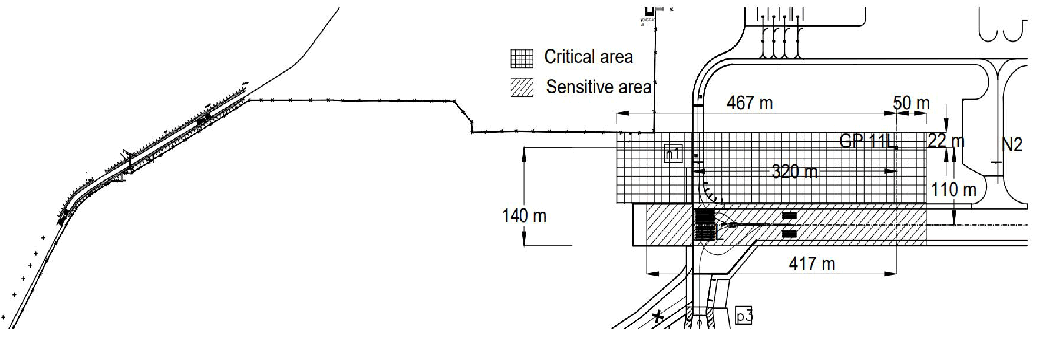
Critical and sensitive area of ILS CAT I - RWY 11L.
GLIDE PATH 11L CAT I
LOCALIZER 11L CAT I
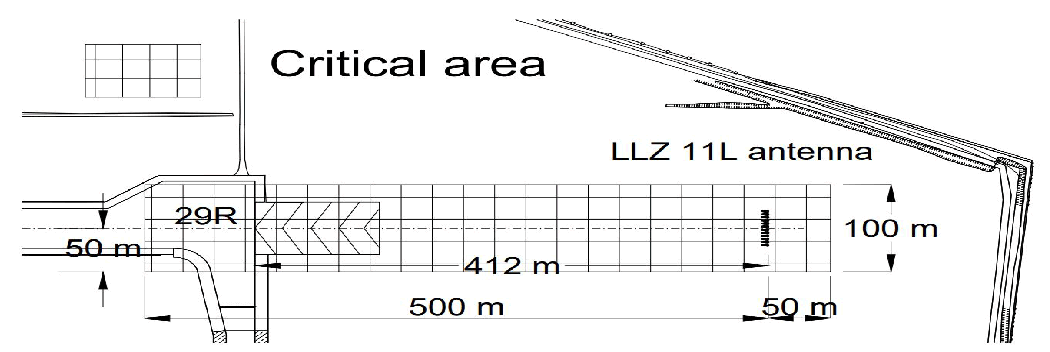
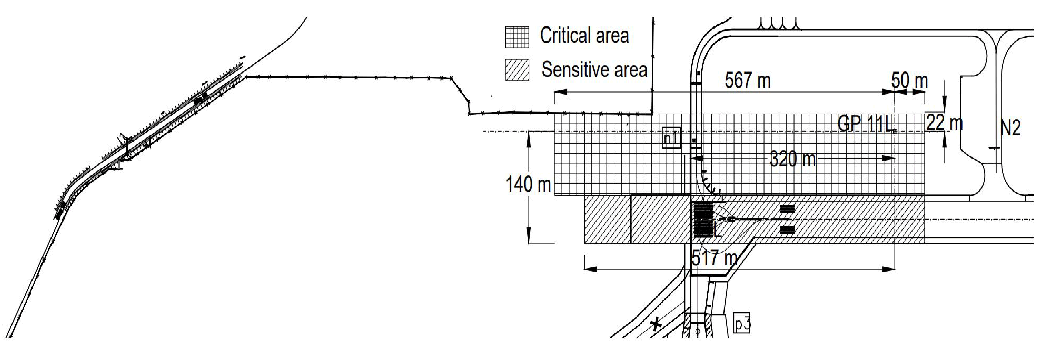
Chart of the critical and sensitive area of ILS CAT II - RWY 11L.
GLIDE PATH 11L CAT II
LOCALIZER 11L CAT II
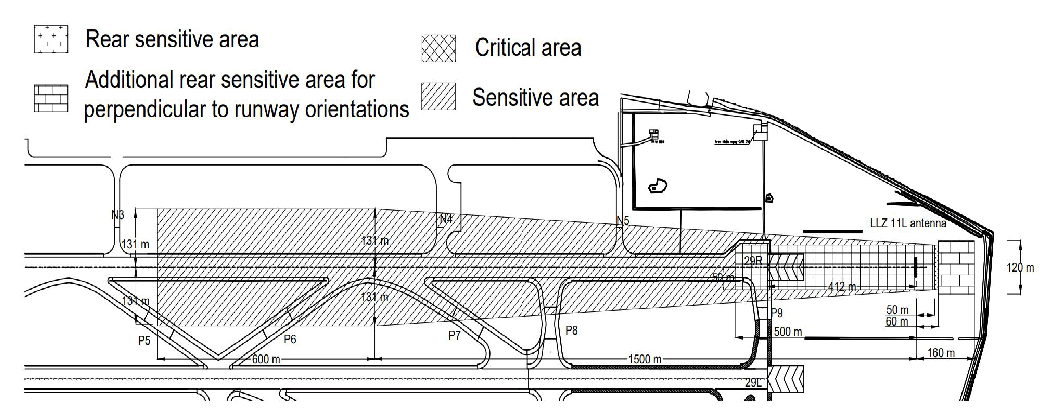
Chart of the critical and sensitive area of ILS CAT I - RWY 11R.
GLIDE PATH 11R CAT I
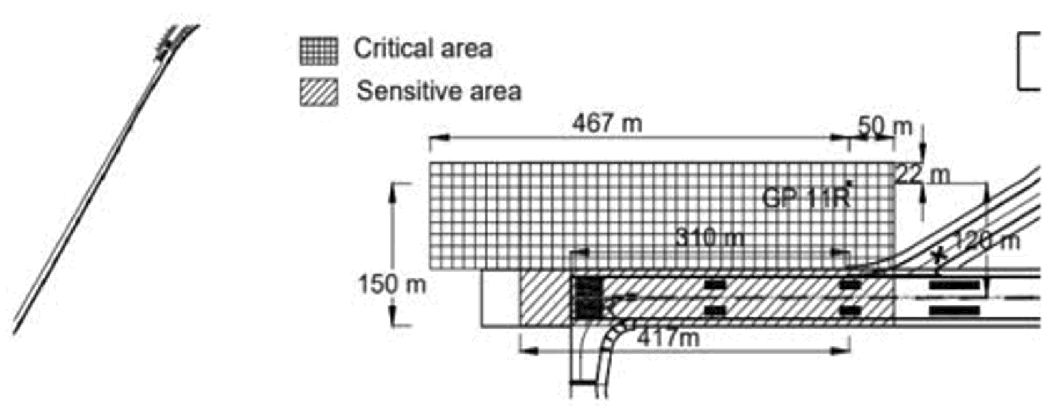
LOCALIZER 11R CAT I
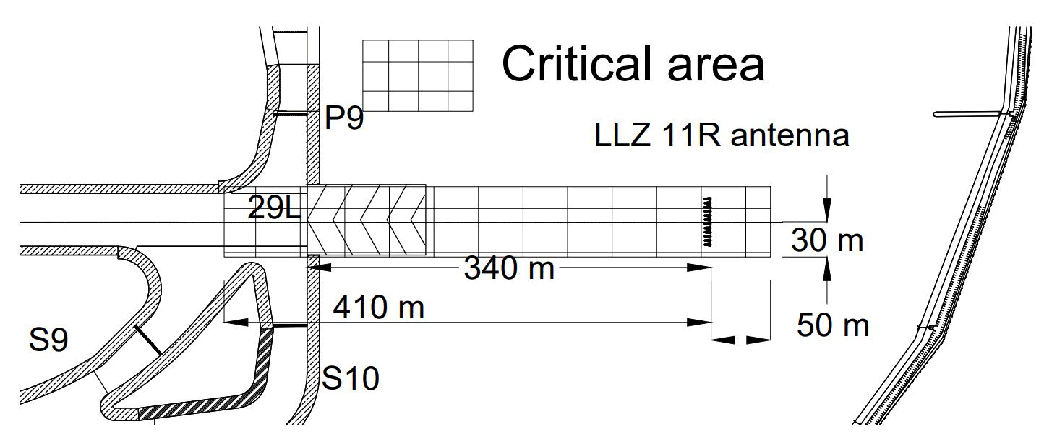
Chart of the critical and sensitive area of ILS CAT II - RWY 11R.
GLIDE PATH 11R CAT II
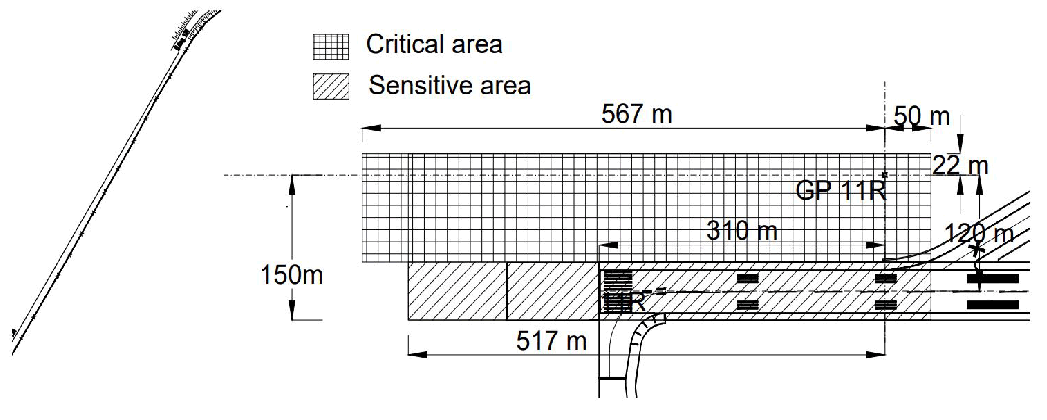
LOCALIZER 11R CAT II
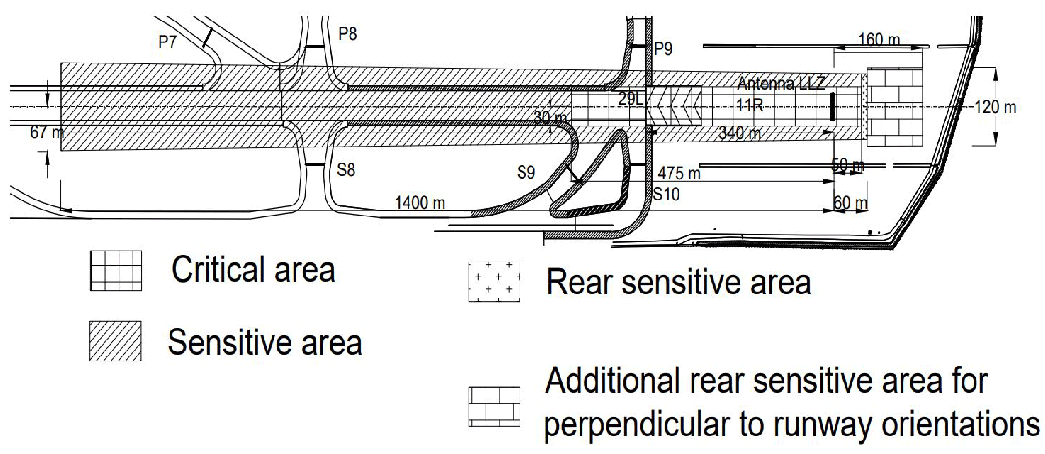
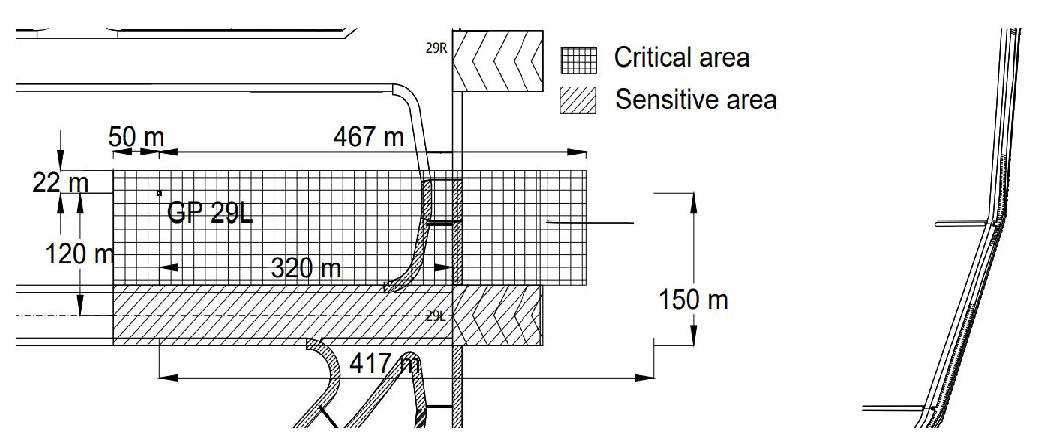
Chart of the critical and sensitive area of ILS CAT I - RWY 29L.
GLIDE PATH 29L CAT I
LOCALIZER 29L CAT I
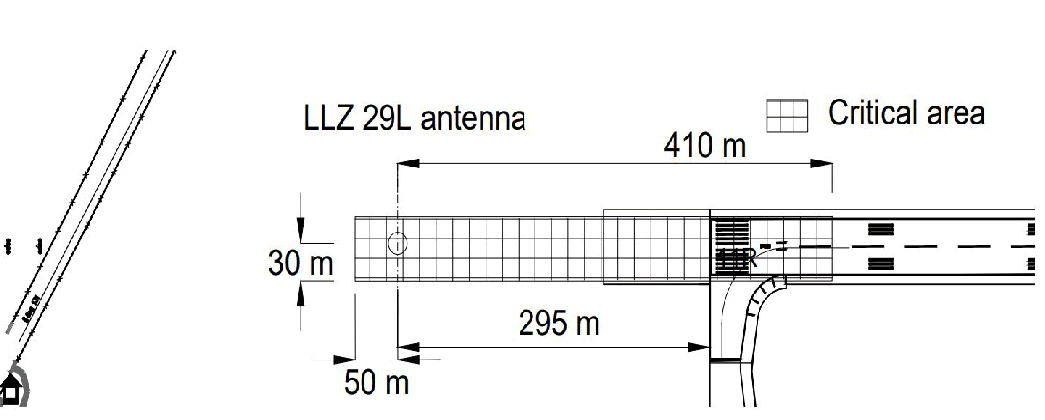
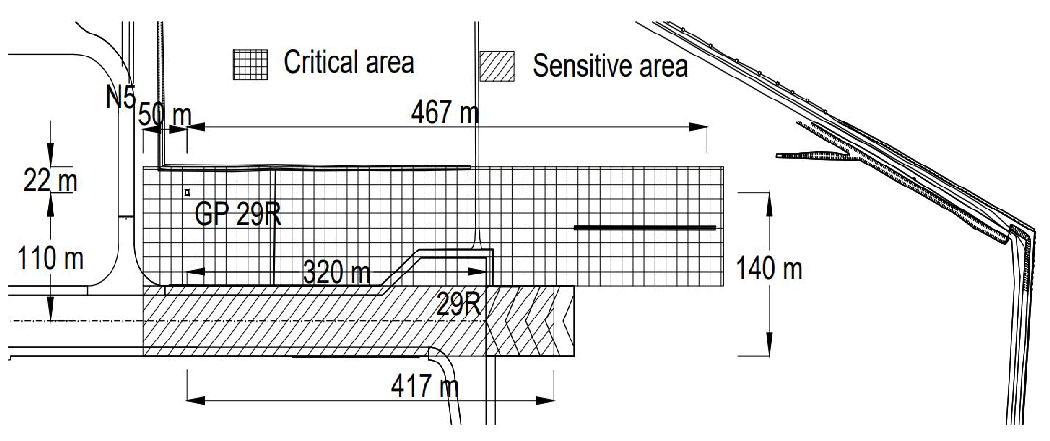
Chart of the critical and sensitive area of ILS CAT I - RWY 29R.
GLIDE PATH 29R CAT I
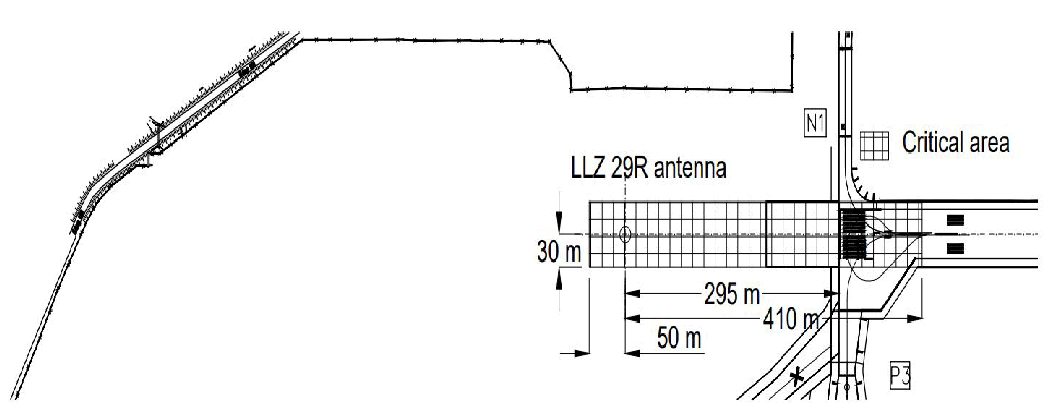
LOCALIZER 29R CAT I
This AIP Supplement becomes effective from 19 FEB 2026.
Any change relating to this AIP Supplement shall be notified by NO TAM.
This AIP Supplement shall remain in force until its content has been in corporated into AIP Viet Nam.
Layout of Aerodrome Ground Movement chart during constructing time